Sustainability doesn’t always mean paying more. As Irish consumers buy less, repair more and make products last, brands have an opportunity to show how sustainable choices can deliver better everyday value.
Did you ever buy a budget item knowing it was cheap and unlikely to last long? “Buy cheap, buy twice” is one of those sayings that survives because almost everyone has learned it the hard way. Some have learned harder than others! The bargain waterproof boots that leak within 2 weeks of buying them (guilty as charged). Or the charger that stops working (like the 4th one). The cheap tires? Uh oh, better watch those turns! The list goes on and on…
For years, one of the biggest challenges around sustainability has been the assumption that doing the environmentally responsible thing inevitably means paying more. Sustainable products are often positioned as the premium alternative: better for the planet of course, but perhaps not always better for our wallets. But what if there was a different way to look at this?
The latest RED C Consumer Mood Monitor Oct 2026 suggests that some of the most common sustainable behaviours amongst Irish consumers are actually much more straightforward. Buy less. Make things last. Repair rather than replace. Use less energy.
Making things last
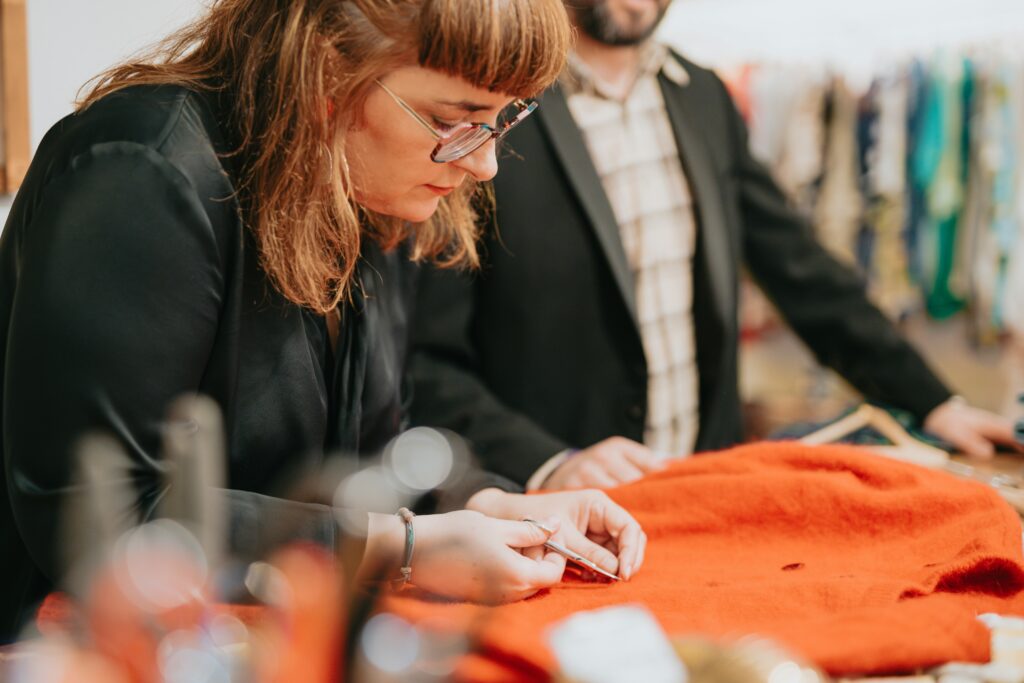
Some 72% of adults say they are buying fewer products and making them last longer, while 67% are repairing products rather than replacing them. Almost two-thirds, 63%, are also choosing products with minimal packaging. On the face of it, these are encouraging sustainability figures. But perhaps just as interesting is that none of these behaviours need to be motivated by sustainability alone. Making something last saves money. Repairing rather than replacing can save money. Buying fewer things saves money. In other words, sustainable behaviour and value-conscious behaviour may increasingly be meeting in the middle. And that potentially matters for how we think about the sustainable consumer.
The sustainable consumer isn’t always who we think
There is certainly a group of consumers willing to pay a premium for sustainability. Some 39% of adults say they are willing to pay more for products or services from brands demonstrating strong sustainability practices, rising to 55% amongst younger consumers. And the figure is considerably higher amongst AB consumers than DE consumers, at 59% versus 35%. However, willingness to pay for sustainability and actually behaving sustainably are not necessarily the same thing. Look at repairing rather than replacing and the picture flips. Almost three-quarters of DE consumers (73%) are already doing this, compared with 57% of AB consumers. The research also shows DE consumers ahead on using less energy, buying fewer products and making them last, and buying second-hand. That seems an important point. We have perhaps become accustomed to picturing the “sustainable consumer” as someone who actively seeks out greener brands and is prepared to pay a little more for them.
But there is another sustainable consumer. One who may be motivated just as much – if not more – by necessity, practicality or value as by environmental concern. Someone buying second-hand, repairing the washing machine, using less energy or simply deciding they don’t need to replace something yet. The motivation may be different, but many of the behaviours are the same.
The rise of reuse
This builds on something Geoff Tucker and I explored recently Our research found that 43% of Irish adults now regard buying second-hand as a normal part of how they shop, rising to 58% amongst 18–34-year-olds. In ‘Second-hand shopping goes mainstream as Irish consumers embrace value and sustainability’, we argued that something bigger seemed to be happening. Second-hand was moving beyond the traditional idea of bargain hunting and becoming part of a broader rethink of value, consumption and ownership. Consumers are increasingly looking to extract more value from products through reuse, resale, refurbishment and repair. And the latest Sustainability Monitor adds another layer to that story. Perhaps “buy cheap, buy twice” doesn’t simply mean that consumers should spend more in the first place. Perhaps – it is an argument for thinking differently about value altogether. Value doesn’t mean cheap. A product that lasts longer has value. A product that can be repaired has value. A product that can be resold, refurbished or passed on to someone else retains value.
Could it be that sustainability and value for money may not be quite the opposing forces we sometimes assume them to be? This seems increasingly to be the case.
Sustainability in the real world
There are other signs of this practical sustainability in the latest RED C Consumer Sustainability Monitor. Nearly 9 in 10 (87%) already are recycling and composting, while 74% say they are using less energy. When it comes to food, 60% say they already buy local, in-season produce. Compare that with eating plant-based foods and limiting animal products, which only 25% currently say they are doing. Nearly half (47%) say they are simply not open to doing it. There appears to be a fairly straightforward message here, and one that brands should take to heart – and then some. Consumers seem most likely to embrace sustainability when it works with their lives rather than against them. This seems to especially be the case when there is another tangible benefit attached. Sometimes that’s environmental. Sometimes it’s convenience. And sometimes it may simply be about getting better value from the things we buy. That matters because five years ago, one of the big questions was how we could translate people’s concern about sustainability into meaningful action. At that time, 58% said they wanted to live more sustainably but were unsure how.
Is it time – and it seems it is – to look at this question slightly differently? Consumers are already acting. But they are doing it in ways that make sense within the realities of their own lives.
So where do brands fit in?
None of this removes the role of brands. In fact, it arguably makes that role more important. More than two-thirds, 68%, say they expect brands to lead them towards sustainable choices, rising to 76% amongst under-35s. Meanwhile, 57% prefer to buy from brands that are transparent about their environmental and social impact. But perhaps brands need to think differently about the proposition. Sustainability doesn’t always need to be sold as a premium choice or something consumers must sacrifice for. There is an opportunity to connect it with something much more immediate: quality, durability and value. If a product lasts longer, tell people. If it can be repaired, make that repair easy. If it can be reused, refurbished or resold, think about how the brand can remain part of that journey rather than simply selling the replacement.
This is something Geoff Tucker and I touched on in our recent reuse article. Brands increasingly operate in a marketplace where new products sit alongside pre-owned, refurbished and reused alternatives. We argued that product quality, durability and genuine innovation therefore become increasingly important, while brands may also need to participate in the circular economy themselves. A word of warning though. Consumers aren’t simply waiting for brands to tell them that something is sustainable. More than one in three say they have switched products or brands because of sustainability concerns, while 53% say they would strongly consider changing brands if they suspected them of greenwashing.
So this isn’t about putting a green label on a product, charging a bit more and calling the job done. It’s about making the benefit tangible. Help people buy something that lasts. Help them repair it. Help them reuse or resell it. Give them realistic sustainable choices at everyday prices and give them information they can actually use. Most importantly, don’t assume that the sustainability audience is limited to the affluent consumer prepared to pay extra for greener credentials. The behaviours we see in the latest Consumer Sustainability Monitor suggest sustainable consumption is happening right across the broader Irish society, even if the motivations behind it differ somewhat depending on the group.
Perhaps the next phase of sustainability isn’t about asking consumers to spend more to save the planet. It is about brands helping them get more from what they already buy.
And helping them keep their feet dry in the process.
Download the latest Sustainability Monitor
Want to understand how sustainability is shaping consumer behaviour in your category?
Talk to the RED C team at [email protected] to find out how we can help.
 Understanding Behaviour
 Building Brands
 Improving Experiences
 About Us
 Our Team
 Our Associations
 Our Work
 Our Clients
 How We Do It
 Products We Use
 Where We Do It
 Political Polls
 Consumer Trends
 Our Thinking
 Latest RED C News
 Get in Touch
 Join RED C
 Join our Online Panel