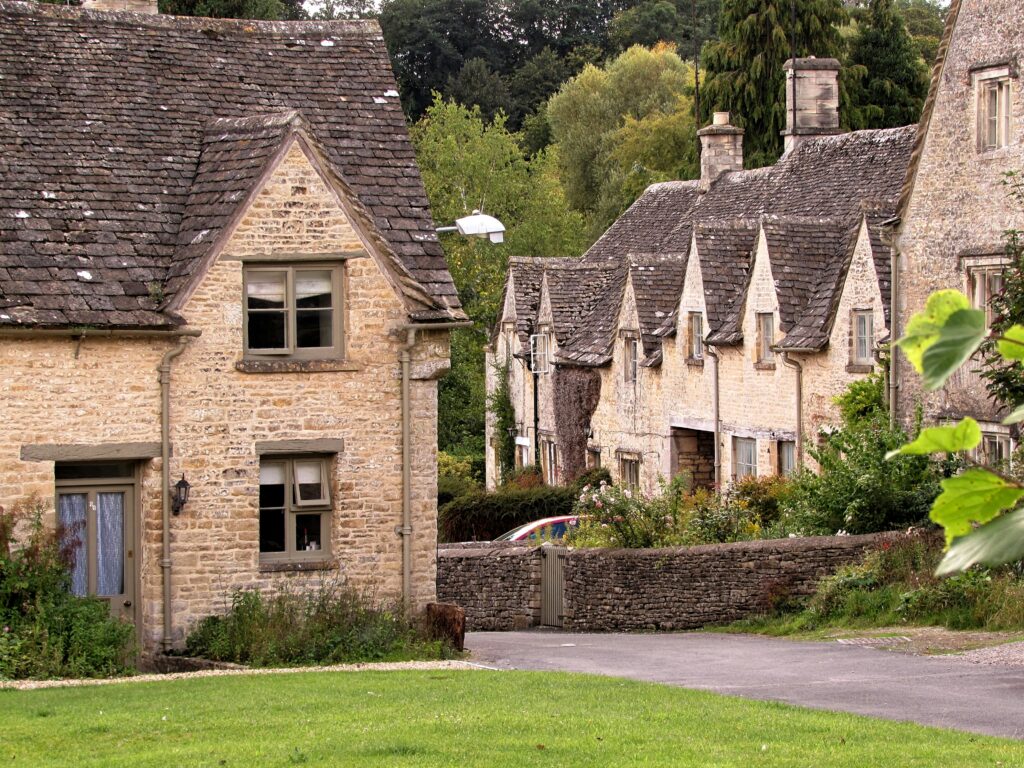
English Tourism Week is a timely moment to ask a harder question: beyond the Cotswolds and the capital, does Britain truly understand what makes it attractive to international visitors, and does it know how to replicate that magic at scale?
This week, VisitEngland marks English Tourism Week under the strapline ‘Local Stories, National Growth’, a celebration of the people, places, businesses and experiences that give England its character as a destination. It is a well-chosen theme. If there is one truth that sits at the heart of British tourism, it is that the most powerful draw this country has is not infrastructure, or price, or even accessibility, it’s specificity. The sense that here, and only here, you can experience something that exists nowhere else on earth.
Living in Yorkshire, I’ve seen first‑hand how destinations like York, Whitby and Haworth are gathering momentum, powered by Instagram and a growing demand for authentic English experiences. But there’s a wealth of other northern destinations with extraordinary – yet still largely untapped – potential. From Helmsley to Hawes and Pateley Bridge, these places are full of character and authenticity that international visitors are increasingly seeking but have yet to fully discover.
Against this backdrop, the Government’s ambition to attract 50 million international visitors a year by 2030 is both exciting and demanding. Tourism is already worth £127 billion to the English economy alone, supporting more than two million jobs. The industry has the scale. What it needs is the strategic clarity to grow in the right direction.*
Few destinations anywhere in the world have built international appeal as organically, or as rapidly, as the Cotswolds. International interest has surged by 39% in recent years, driven by a potent mix of quintessential English charm, celebrity visibility and a visual identity so distinctive it has been described in travel media as fairytale. Bibury has been named the world’s most beautiful village. Accessibility from London makes the region the perfect short break. Luxury hospitality has followed the attention, reinforcing the premium positioning.**
But here is the strategic problem. The Cotswolds is not a product that was designed, launched and marketed. It is an accumulation of authentic detail, the stone, the light, the villages, the pace, that found its moment through a combination of social media, pop culture and word of mouth. You cannot simply identify the next Cotswolds and build one. What you can do is understand, rigorously and through proper research, what it is that international visitors are actually responding to when they fall in love with a place, and then look for those qualities in destinations that have not yet found their audience.
What makes Britain genuinely unusual as an international tourism proposition is the sheer density of layered appeal within a small geographic footprint. In a day’s drive you can move from a medieval cathedral city to a dramatic coastline to a living literary landscape to a world-class food destination. History, landscape, culture and genuine warmth add up to something formidable when the offer is presented coherently to international markets.
The opportunity for England is to stop marketing individual assets and start marketing a feeling. The feeling of being somewhere that rewards digging deeper and that has texture and stories that cannot be found anywhere else. The destinations that have cracked this, that have moved from listing their attractions to articulating their emotional truth, consistently outperform those that have not. That shift can’t happen without understanding what visitors are actually feeling, not just what they are doing.
‘Local Stories, National Growth’ is not just a campaign strapline. Taken seriously, it is a research agenda. Local stories that will drive national growth are not all obvious ones. They are not all in the guidebooks, or within easy reach of a mainline station, or already trending on social media. Some of the most compelling visitor experiences in England, the heritage railways of North Yorkshire, the vineyard tours of Kent, taking a houseboat onto the Norfolk Broads for the first time, are places and experiences that international visitors have yet to discover in significant numbers, because for the most part they don’t know what they are looking for.
This is where destination research earns its keep. Understanding which motivations drive different international markets, which moments in the visitor journey are decisive, and which experiences generate the kind of advocacy that drives the next booking is not intuition work. It is rigorous, systematic, and when done well, it reveals opportunities that competitive instinct alone will consistently miss.
Attracting 50 million international visitors a year is a logistics challenge as much as a marketing one. The tension at the heart of the current moment is that Britain’s most successful destinations are already straining under visitor pressure, while large parts of the country remain largely invisible to international audiences. Growth concentrated in the same handful of postcodes is not national growth. It is overcrowding in some places and missed economic opportunity everywhere else.
The strategic opportunity is to use visitor insight to guide not just promotion but visitor dispersal. Understanding which international markets are open to experience-led travel beyond the obvious hotspots, which UK destinations have the product quality to deliver against international expectations, and what barriers currently prevent visitors from venturing further is what allows a country to grow its tourism economy without simply deepening the pressure on the places already working hardest.
Not all visitors are equal, and the most sophisticated destination marketing strategies have always known this. A first-time American visitor on a long-haul trip of a lifetime, spending freely across hotels, restaurants, experiences and retail, can represent more economic value to a destination than many multiples of a budget European short break. The goal of reaching 50 million visitors should never be allowed to obscure the more important question of what kind of visitors, spending how much, staying where, and doing what.
A visitor who arrives at Heathrow, spends two nights in London and takes a day trip to the Cotswolds has barely scratched the surface of what Britain offers. The visitor who takes a houseboat through the Norfolk Broads, eats at a farm-to-table restaurant in the Wye Valley and books a guided tour of a private country house estate is both spending more and experiencing more. Building the insight that allows destination organisations to understand, attract and retain high-value visitors is not a peripheral concern. It is the central one.
Understanding visitors is what we do
The Places and Spaces team at RED C specialises in the visitor insight that destinations and the organisations that support them need to make confident strategic decisions. Our team work across the full Places & Spaces landscape, from airports and attractions to heritage sites, tourist boards and major retail and leisure destinations. We understand how visitors choose, how their expectations are formed long before they arrive, what shapes their experience on the ground, and what turns a single trip into a lasting relationship with a place.
Our clients face versions of the same fundamental challenge: how do you build genuine, evidence based understanding of why visitors come, what they find when they get there, and what it would take to attract more of the right people more often. That is the question we are built to answer.
If you are responsible for growing a destination and you want to make sure your decisions are driven by insight rather than assumption, we would love to hear from you.
Book a 30minute call with the team today

Katie Firth, Insight Director | [email protected]
Sources
**https://www.expedia.com/newsroom/where-to-travel-in-2026-expedia/
 Understanding Behaviour
 Building Brands
 Improving Experiences
 About Us
 Our Team
 Our Associations
 Our Work
 Our Clients
 How We Do It
 Products We Use
 Where We Do It
 Political Polls
 Consumer Trends
 Our Thinking
 Latest RED C News
 Get in Touch
 Join RED C
 Join our Online Panel