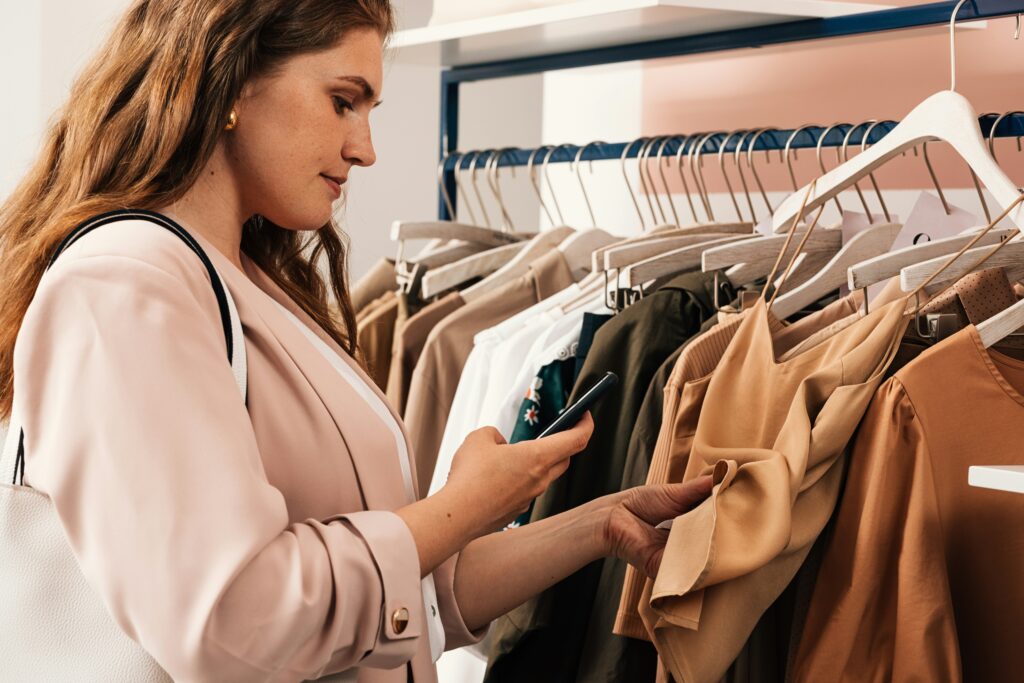
Irish consumers have not stopped spending, but retailers now must work much harder to prove that a purchase is worth making
Irish consumers have spent the past few years adapting to higher living costs and greater pressure on household budgets. What is emerging is not simply a shopper who wants everything cheaper. It is a more deliberate consumer who compares, questions and increasingly expects retailers to demonstrate value before committing.
New RED C research shows just how widespread these behaviours have become. Eight in ten consumers claim they are comparing prices across more retailers than a year ago, while 78% are more likely to delay non-essential purchases until they are discounted or on special offer. Some 77% claim they are cutting back on non-essential spending because of the cost of living.
But price is not the whole story. Almost three-quarters, 72%, claim they are buying fewer items but choosing products that will last longer. The same proportion claim that loyalty rewards or member discounts influence which retailer they choose.
For Irish retailers, that combination matters. Consumers are not simply looking for something at the lowest price. Increasingly, they are looking for something that feels worth it.
Caution has become mainstream
Our research asked consumers to describe how they currently feel financially. Only 7% consider themselves to be “Thriving”, with a further 24% “Comfortable”. The largest group, at 36%, describe themselves as “Cautious”, keeping a closer eye on spending and becoming more selective about purchases. A further 20% are “Under Pressure”, while 12% are “Struggling”.
The temptation for retailers might be to concentrate their value proposition on the third of the population experiencing the greatest financial pressure. The evidence suggests that would be a mistake.
Price comparison, promotional shopping and greater consideration of purchases extend well beyond financially struggling consumers. In other words, behaviours learned during a period of intense cost-of-living pressure may be becoming part of how Irish consumers shop more generally.
The research cannot tell us whether that change will be permanent, but retailers should not assume that greater financial confidence will automatically return shoppers to their previous habits. Value has become everybody’s business.
Different consumers are expressing value in different ways
There is no single cautious shopper. Females are particularly active value managers. Some 84% claim they are comparing prices across more retailers, compared with 76% of men. Females are also more likely to be cutting back on non-essential purchases, at 82% versus 73% for men, and to claim loyalty rewards or member discounts affect retailer choice, at 77% versus 67%.
Among different age groups, we also record evidence that value is being interpreted in different ways. Second-hand and pre-owned purchasing is considerably more established among consumers under 45, while engagement declines progressively among older age groups. This suggests that for many younger and mid-life shoppers, value is increasingly about considering alternatives to buying new, rather than simply searching for the cheapest new product.
For fashion, technology, furniture and other categories where resale is viable, this has an important implication. The competitive set is changing. A new product is increasingly competing not only against another new product or another retailer, but also against a pre-owned, refurbished or resale alternative. Social class is important too, but not always in the way we might expect. Cutting back on non-essentials is higher among lower social class consumers, yet price comparison is widespread across social groups.
Regional differences are relatively modest by comparison. The bigger message is that considered shopping is not a confined to a particular part of the country. It is national.
Grocery is being protected, but value still matters
Grocery presents a particularly interesting picture. Looking towards Christmas, 29% expect to spend more on groceries than last year, compared with 23% expecting to spend less. It is one of the few areas where increased spending outweighs planned cutbacks. In contrast, 42% expect to reduce spending on clothing, 45% on alcohol and 41% on gifts for adults.
That does not mean supermarkets can worry less about value. Arguably, the opposite is true.
Consumers cannot postpone the weekly grocery shop in the same way they can postpone buying a coat, television or sofa. Instead, pressure is likely to manifest itself in how consumers construct their shopping basket, which brands (if any) they choose, when they buy on promotion, where they trade down and where they are still prepared to pay more.
For grocery retailers, the opportunity is therefore to help consumers feel they are managing the household budget well. This means providing easily understood promotions, meaningful loyalty rewards, clear price architecture and distinctive quality at different price points. Value should feel easy to recognise.
Irish retailers have an advantage, but not a blank cheque
There is also an interesting tension in attitudes towards buying Irish. Just 38% claim they would be willing to pay a little more to purchase from an Irish retailer rather than an overseas one. At the same time, 69% explicitly claim price is more important than whether the retailer is Irish or based overseas.
That does not mean Irishness is unimportant. It means provenance works best when it strengthens an already credible proposition.
Irish retailers also benefit from growing friction around buying further afield. Almost three-quarters of consumers claim additional customs charges or fees make them less likely to buy online from retailers outside the EU. Among those aged 65 and over, this rises to 83%.
Christmas spending intentions reinforce that finding. While 28% expect to spend less in physical Irish shops than last year, 55% expect to spend less online with retailers outside the EU, including those in the UK, US or China.
This creates an opportunity for Irish retailers, but not an automatic win. Being Irish can help consumers choose you. It cannot be the only reason they should. Clear final pricing, fast delivery, straightforward returns, accessible customer service and confidence that there will be no unexpected charges can turn local presence into something more valuable than provenance alone.
Retailers need to redefine value
The clearest lesson from the research is that competing on value cannot simply mean increasing promotional intensity. If consumers are learning to wait for discounts, endlessly increasing the number of promotions risks reinforcing precisely that behaviour. Retailers instead need to ask a harder question, what gives customers a reason to buy now?
For some categories, that may mean demonstrating quality and longevity. For grocery, it could mean helping customers manage the total basket rather than concentrating on individually discounted products. For others, loyalty can become a much more powerful conversion tool, especially when offers are personalised around purchases consumers are genuinely considering.
For categories exposed to resale, particularly among younger consumers, there is also a case for exploring trade-in, buy-back, refurbished or authenticated pre-owned propositions. The strategic opportunity is to move the conversation from “cheap” to “worth it”.
Irish shoppers have not stopped spending. But they are comparing more, waiting longer and thinking harder before they commit.
The retailers that win in this environment will not necessarily be those that discount most aggressively. They will be those that make it easiest for consumers to conclude this is a smart purchase, at a fair price, from a retailer worth choosing.
Understanding retail behaviour is what we do
The Retail team at RED C helps clients understand how consumer expectations, spending priorities and shopping behaviours are changing. We combine robust research with commercial interpretation, helping retailers identify the factors shaping choice and turn consumer insight into practical action.
If you are responsible for growing a retail brand and want your strategy grounded in a deeper understanding of Irish shoppers, we would love to hear from you.
The findings are based on RED C research conducted online between 28 October and 2 November 2026 among a nationally representative sample of 1,005 adults living in the Republic of Ireland.
 Understanding Behaviour
 Building Brands
 Improving Experiences
 About Us
 Our Team
 Our Associations
 Our Work
 Our Clients
 How We Do It
 Products We Use
 Where We Do It
 Political Polls
 Consumer Trends
 Our Thinking
 Latest RED C News
 Get in Touch
 Join RED C
 Join our Online Panel