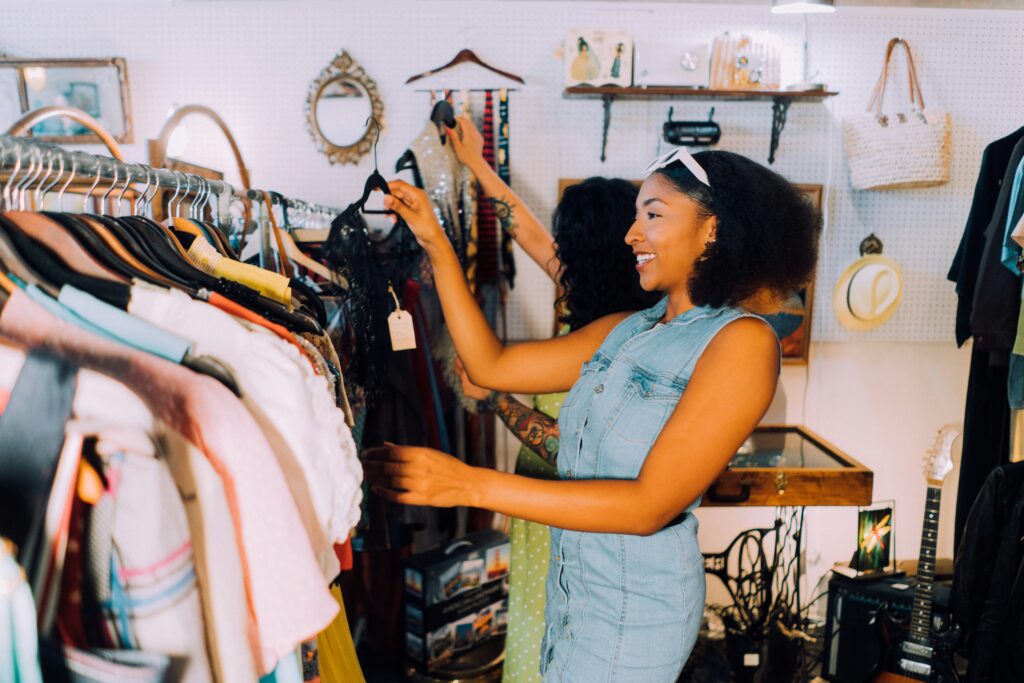
A quiet but significant shift is taking place in Irish consumer behaviour. More people are embracing second-hand shopping not simply as a way to save money, but as part of a broader move towards more sustainable and circular patterns of consumption. Using new consumer data from RED C, Geoff Tucker and Derek Bell explore why the second-hand market is expanding, how younger generations are leading the change, and why brands may need to rethink how they compete in a world where new products increasingly sit alongside refurbished, reused and pre-loved alternatives.
The rise of second-hand shopping is no longer a niche trend confined to charity shops, vintage enthusiasts, or bargain hunters. Increasingly, it is becoming a normal part of everyday consumer behaviour in Ireland.
New research from RED C shows that 43% of Irish adults now see buying second-hand as a normal part of how they shop. What may have started as a practical response to rising living costs appears to be evolving into something much more significant: a shift in how consumers think about value, consumption, and ownership.
The trend is particularly pronounced among younger consumers. Almost six in ten (58%) adults aged 18-34 say second-hand shopping is now a normal part of their purchasing behaviour, rising to 66% among 18-24 year olds. However, acceptance declines steadily with age, falling to just 29% among those aged 65 and over.
There is also a notable gender divide. Half of women (50%) say buying second-hand is a normal part of how they shop, compared to just over one-third of men (36%). This may partly reflect the stronger influence of online platforms that specialise in second-hand fashion, although the gap also suggests women may be leading the broader shift towards reuse and resale.
Interestingly, the appeal of second-hand shopping cuts across social grades. The figures are virtually identical among ABC1 consumers (44%) and C2DE consumers (45%), suggesting that this is not simply a story of affordability. While saving money is undoubtedly a key driver, consumers are increasingly motivated by other factors too, including sustainability, uniqueness, and a desire to consume more responsibly.
Increasingly, consumers are choosing behaviours that maximise the value extracted from the products they buy. In many ways, this represents the consumer-facing manifestation of the circular economy.
For years, policymakers have promoted the idea of moving away from the traditional “take, make, use, dispose” model towards one that keeps products and materials in use for longer through repair, reuse, refurbishment, and resale. Government initiatives such as Circular.ie, the national platform designed to promote circular living and behaviours, aim to make these practices more visible and accessible to Irish consumers. The broader ambition is straightforward: reduce waste, extract more value from existing products, and make sustainable choices easier for households. Ireland’s circular economy strategy explicitly promotes behaviours such as repairing, sharing and buying second-hand as part of this transition.
Across Europe, policymakers are increasingly encouraging consumers to repair, refurbish, reuse and resell rather than replace. The new EU-wide Right to Repair regulations, which came into force this year, give consumers greater rights to seek repairs on a range of products and require manufacturers to improve access to repair services and spare parts. The objective is clear: keep products in use for longer and reduce unnecessary waste.
The challenge for policymakers has often been turning an abstract sustainability concept into something people can relate to. Yet consumers appear to be getting there organically, given that many people are already engaging in circular behaviours through activities such as using charity shops, buying via marketplace apps, repairing items, and passing goods on to others.
Digital marketplaces have been central to this shift.
Traditional classified platforms such as DoneDeal, Adverts and Facebook Marketplace have long enabled peer-to-peer resale in Ireland and have transformed how Irish consumers buy and sell furniture, household goods, baby equipment and home furnishings.
This behaviour has become particularly important for younger homeowners and first-time buyers. Against the backdrop of Ireland’s housing crisis, many households find themselves stretching finances to secure a home, often leaving less available for furnishing and equipping it. As a result, consumers are increasingly turning to second-hand channels for dining tables, sofas, wardrobes and appliances that can often be purchased for a fraction of their original cost. The survey evidence points in the same direction. Second-hand shopping is somewhat more common among those living in rental accommodation, with almost half (49%) saying it is a normal part of how they shop.
More recently, the arrival of Vinted has accelerated the trend in the re-sale of clothing, particularly among younger consumers. Launched in Ireland in November 2024, the platform has rapidly grown and is further helping to make second-hand shopping more socially acceptable.
What was once viewed as a compromise is increasingly seen as a smart financial decision. For many consumers, especially younger households, there is little social stigma attached to buying pre-owned items. Instead, it is often viewed as resourceful, sustainable and financially sensible. The ability to access good-quality products at significantly lower cost has helped create a thriving secondary market that competes directly with traditional retailers.
Technology provides another strong example. Companies such as Swappie and Refurb.ie have built businesses around refurbished smartphones, laptops and other tech devices. Consumers increasingly view these products not as second-best alternatives but as legitimate value propositions, often offering significant savings with little perceived compromise in quality.
This raises an important question: what does all of this mean for brands and retailers?
For decades, brands primarily competed with other brands. Today, they increasingly compete with their own products in the resale market. A consumer considering a new sofa or wardrobe is also considering a used one on Facebook Marketplace. Someone upgrading their smartphone might opt for a refurbished model rather than a brand-new device.
This creates a challenge for brands. Consumers are no longer choosing solely between Brand A and Brand B. Increasingly, they are also choosing between buying new and buying pre-owned.
In a world where second-hand alternatives are becoming more visible and credible, brands may need to work harder to justify their price premium. Product quality, durability and genuine innovation become increasingly important. Equally, brands may need to participate directly in the circular economy themselves.
This is also reflected in RED C’s latest Sustainability Monitor. Conducted in March 2026, the research found that nearly eight-in-ten (79%) Irish adults would feel greater loyalty towards a brand that provides guidance on how to fix products and make them last longer. This suggests that durability, repairability and product longevity are no longer secondary sustainability considerations. They can also strengthen the relationship between brands and consumers in a market increasingly shaped by reuse, resale and refurbishment.
IKEA’s recent announcement that it was “investing in price cuts” was, in many respects, simply a retailer putting products on sale. Yet the positioning was notable. Rather than focusing solely on price, IKEA framed the initiative around “helping households manage ongoing cost-of-living pressures”, a tacit acknowledgement that many consumers remain under financial strain. The same company is also investing in buy-back and resale schemes for used furniture, recognising that consumers increasingly see value not just in new products but in second-hand alternatives. In that sense, IKEA is adapting to a market where its competitors are no longer just other furniture retailers, but also Facebook Marketplace, Adverts, DoneDeal and the growing circular economy.
The brands that thrive over the next decade may not be those that resist the circular economy, but those that embrace it. As second-hand shopping becomes increasingly mainstream, the lines between new and used, ownership and reuse, are becoming blurred.
For Irish consumers, that’s likely to mean more choice, better value and more sustainable ways to shop. The practical appeal is obvious too: products last longer, household budgets stretch further, and good-quality items remain accessible to more people for longer. For brands, it means adapting to a market where the competition is no longer limited to the shop next door, but increasingly includes the customer’s neighbour as well.
Understanding behaviour is what we do
The FMCG & Retail team here at RED C specialises in the consumer insight that brands need to make confident commercial decisions. We work across categories, channels and occasions, helping our clients understand not just what people are buying, but why they are buying it, how those behaviours are changing, and what truly drives choice, loyalty and trade‑off at the point of decision.
If you are responsible for driving growth in FMCG or retail, and want your strategy shaped by real behavioural insight, we would love to hear from you.
Book a 30-minute call with the team today
Download latest Ireland Sustainability Monitor report
Methodological note
The findings are based on an online survey conducted between 16th and 21st July 2026 among a nationally representative sample of n=1,008 adults aged 18+ living in the Republic of Ireland. The sample was drawn from RED C Live, RED C’s proprietary online research panel comprising more than 40,000 members. Data were weighted to be representative of the adult population by age, gender, region and social class, ensuring the results reflect the views of adults across Ireland. Results are subject to the normal margins of error associated with sample surveys.
 Understanding Behaviour
 Building Brands
 Improving Experiences
 About Us
 Our Team
 Our Associations
 Our Work
 Our Clients
 How We Do It
 Products We Use
 Where We Do It
 Political Polls
 Consumer Trends
 Our Thinking
 Latest RED C News
 Get in Touch
 Join RED C
 Join our Online Panel